Friday, April 23, 2010

VINDICATION!!

I explained my reasons for calling this blog "Seeing Race" in this post. I concluded that:
When my students say that they don't "see race", they are really telling me that they don't see the continued prejudice and discrimination suffered by minority groups.
It turns out that Brendesha Tynes, a professor of Educational Psychology and African American Studies at the University of Illinois, has conducted research that agrees with my opinion. (ha! love it when that happens.) You can read all about it here.

Choice quotes:
“If you subscribe to a color-blind racial ideology, you don’t think that race or racism exists, or that it should exist,” Tynes said. “You are more likely to think that people who talk about race and racism are the ones who perpetuate it. You think that racial problems are just isolated incidents and that people need to get over it and move on. You’re also not very likely to support affirmative action, and probably have a lower multi-cultural competence.”
AND
“What we found is that the color-blind ideal commonly socialized and valued among whites may actually be detrimental to race relations on college campuses.” [and everywhere else, I would add]
Me and science, we're like this.

Thursday, April 22, 2010

HGTV, what the crap is "Asian inspired?"

I was grading papers this afternoon and watching HGTV (don't judge, it's great background TV because you don't have to actually pay attention, just look up once in a while and go "ooooh, those people have more money than sense, also, I want a koi pond").

And because it is Earth Day, all of the shows had an obligatory "green" theme. As I half-watched, I noted that two shows in a row also had an "Asian" theme, Colorsplash with David Bromstad and Spice Up My Kitchen. Both of these shows were fixing up the sad kitchens of Asian homeowners, two sisters in the former and a couple in the latter.

Which brings me to the question, what the crap does Asian-inspired actually mean?

Colorsplash entitled this episode "Asian-Inspired Kitchen with Eco-Friendly Materials (Episode HCLRS-411), and the homeowners actually suggested the Asian theme for their kitchen. They were Japanese-Americans, and David Bromstad took inspiration from a (kind of cliche, but still very pretty) photo of Mount Fugi with an orange-leafed branch in the foreground. The result was a gorgeous kitchen that the sisters completely adored.

But why call this Asian inspired instead of Japanese inspired, which it clearly was?

Spice Up My Kitchen called their episode "A Modern and Eco-Friendly Kitchen Renovation" (Episode HSUMK-504). Note that they did not use the word "Asian" in the title but used it roughly 700 times in the first five minutes of the episode. They had the Asian (I'm guessing Chinese since their name was Li, but I could be wrong here) couple chose between two layouts, the first "Asian" inspired and modern, the second more old fashioned and not Asian inspired.
The couple chose the first layout, but they did not use the word Asian when they explained why they made their decision. Instead, they pointed to the very snazzy appliances and other modern touches. In fact, the Lis used the word Asian only once in the episode that I counted, unlike the host who couldn't stop repeating it.*

The host also kept pointing out how the Asian layout matched the rest of the couple's house. Now, perhaps she was referring to the modern style in the house, or perhaps the couple had intentionally cultivated their own Asian theme. But what I kept thinking was "does the Asian layout match the rest of their house just because they're Asian?"

Here is the final result, taken from here:Asian-y!

I'm still not entirely sure what makes this Asian inspired. Unlike the Colorsplash kitchen which at least featured some cherry-blossom-like branches on the cupboards and things like this Shoji Lamp which are Japanese, the Spice Up My Kitchen - um - kitchen - has...

Square plates?

And was kind of weird about the whole Asian thing throughout the episode, particularly since the Asian homeowners didn't seem that keen about the theme to begin with.

It got me thinking... how many times do you see HGTV produce a room that is "European-inspired"? Let's do a quick search on HGTV.com.

"European inspired": 55 results

"Asian inspired": 228 results

Ok. We've learned that Asian inspiration hits HGTV designers about 4 times more than does European inspiration. But they do do rooms that are inspired by Europe, the massive, general continent.

Let's do another search.

"French inspired": 141 results.

HGTV designers are inspired by France, the specific country and cultural area, 2 1/2 times more often than by Europe in general.

"Japanese inspired": 75 results.

HGTV designers are inspired by Japan, the specific country and cultural area, 3 times less than they are by Asia in general.

So what?

So when we think of Europe and European inspiration in our home decor, we are way more likely to think of a specific region or movement - Tuscany, Paris, Bauhaus - than we are to think of Europe as a whole. This is because we are familiar with the enormous differences between the different regions in Europe and understand that each culture has its own unique characteristics.

But when we think of Asia and Asian inspiration, we aren't as likely to think of a specific culture (even though we may end up relying heavily on one culture, like Japan, for our actual inspiration). Asia, like Europe, is made up of many different cultural regions. Thailand is different from China is different from Japan, just as much as France is different from Germany is different from Spain. (And, of course, each country itself contains numerous separate regions with their own cultural differences).

We don't think of Asia in this way, we think of it as a single, homogeneous area with all of the same things in it. Just look at the search results! Designers do use Europe as a whole, but they are more likely to use a specific region, like France. Conversely, designers are much more likely to use Asia as a whole than they are to use a specific region, like Japan.

The designers (like most Americans) likely don't know as much about Asia as they do about Europe and so aren't able to make a Vietnamese inspired room, but could create a Spanish inspired room.

In this way, we can see how our preconceptions and ignorance about non-white cultures creeps into every aspect of our lives - is invited, in fact, into our own rooms either through HGTV or by our decor decisions.

*Full disclosure - I didn't finish watching this episode because I fell asleep. I DO NOT GET PAID FOR THIS, OK. Perhaps the host apologized for stereotyping the Li family or the Li family enjoys vaguely Asian themed things. It's just a jump-off for my larger point, let's move on.


ETA:
It was suggested that I search "African inspired". Here are the TOTALLY UNSURPRISING results:

"African inspired": 43 results

"Egyptian inspired": 8 results, but the first hit is about Feng Shui

"Kenyan inspired": 0 results (2, if you change it to "Kenya inspired")

This obviously raises a whole separate conversation of what is trendy and which cultures we value and celebrate or find non-threatening enough to put in our own homes. For another day!

Wednesday, April 21, 2010

WOOOO! Summer Break!

I have 8 more student papers left to grade and then I am OUTTA HERE, SUCKERS!

*ahem*

I mean, I am almost on summer break. As I've mentioned, I'm an archaeologist and I will be hitting the road with some fieldwork on the Great Plains (and possibly other areas - anyone who's ever worked as a Shovelbum knows that fieldwork is never, ever set until about, oh, an hour before heading into the field). As web service tends to be rather spotty in the dodgy rural motels that I expect to be living in for the next few months (also rather spotty in my car, where I may also be sleeping a night or two), I have no idea how often I will be updating from now through September. But I will try!

I get some interesting responses when I tell people I am an archaeologist. Usually, their eyes get real big and they say something like,

"Really? I always wanted to be an archaeologist! When I was five!"

"Um - thanks?" I reply.

"I love looking at the dinosaurs in the museum." They say.

"Oh - no, that's paleontology. Archaeologists work with humans and cultural remains. Not dinosaurs."

They cock their heads to one side. "But what would you do if you found a dinosaur?"

"I would wonder how I had managed to inadvertently shoot thousands of years past my target stratum into solid bedrock. Dinosaurs lived a LONG time before humans."

"So you, like, go to Egypt and stuff, right?"

"No." I patiently explain. "Anywhere humans have lived there is archaeology. Including right here!"

"Can you come dig in my backyard? I think there's an Indian mound there."

"Um - no. And please don't do it yourself."

Silence....

"Is it just like in Jurassic Park?"

"Yes." I say. "Yes it is."

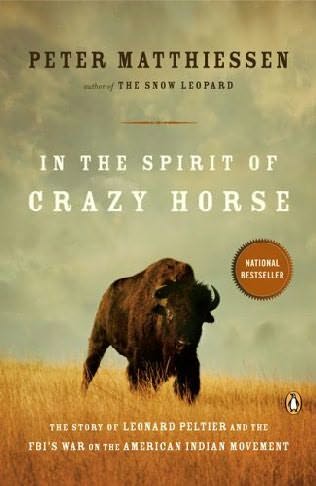
For now, I leave you all with (dum dum dum) HOMEWORK! I just finished "The Unquiet Grave: The FBI and the struggle for the soul of Indian Country", by Steve Hendricks, and I am almost done with "In The Spirit of Crazy Horse: The story of Leonard Peltier and the FBI's war on the American Indian Movement", by Peter Matthiessen. Both are excellent reads if you want to be violently angry for a while.


Ok, maybe that's not the best recommendation, but it is the major emotion I experienced while reading them. I am preparing a post on the reactions of my students to Native American issues, and that should be up by this weekend-ish. Stay tuned!

*In the spirit of full disclosure, I could find (and have found) fossils littered on the surface while on survey. We used to routinely find petrified wood stumps large enough to sit on and eat your lunch. Generally, these are scattered pieces not in context.

Monday, April 19, 2010

A lighthearted post

I spend a lot of time reading things that piss me off (in books, online, in newspapers) and I often launch into long-winded diatribes that my poor husband is forced to listen to.

Naturally, this can get to be a little much.
Sometimes he begs, "can we please talk about something else just for a little bit? I'm already angry enough about the world for one day."
"Ok." I say. "What should we talk about?"

"Um - puppies?" He suggests.

"Puppy mills! Dog fighting! Shelter overcrowding!"

"Uhh - butterflies?"

"Global warming! Pollution! Oil drilling in the ANWR!"
"Fine." He says. "You think of something."


"Unicorns?" I finally suggest.

"Not unless you're willing to admit that you're wrong." He replies.


Oh yes. We had a bitter argument a few months ago about the proper etymology and usage of the word "unicorn". Sadly, this is not a joke.

"Is there nothing that we can discuss that doesn't remind us of horrible things?" I asked.
"Cookies?" He suggested.


"Trans-fats?" I tried. "Cholesterol? Calories? The 'obesity epidemic'?"

"No, we don't care about any of that stuff." He replied.

Cookies it is! So let's all have a cookie.

Saturday, April 17, 2010

Racism Hurts Everyone (and helps white people - shhh. Don't tell.)

In the excellent discussion of my blog post at Stuff White People Do, some mentioned that white anti-racists sometimes kind of hit this awareness peak, and then think that they are now the special white person who does not do those racist things that Other white people still do.

Personally, I believe that being a white anti-racist or ally is kind of like achieving Nirvana. By which I mean, it's a long road to travel, and most will never completely get there, but we can continue to work towards that goal. Overall it's a journey. Will I ever become the perfect white anti-racist who never screws up or reverts or makes a hasty judgment? Sadly, no.

For example, let's take something I did just the other day. (Hey, if you can't share embarrassing stories in an anonymous blog, when can you share them?)

This was set off, as so many terrible things are, by Facebook. Now, I share my generation's love for Facebook and I thought the Doppelganger meme thing was cute. You remember - change your profile pic to your "celebrity doppelganger" for a week.

And then I saw this post at Racialicious, asking if this meme left out POC or other marginalized groups (fat people, PWD [people with disabilities, for future reference]). In the comments, Just A Thought wrote:
The doppelganger meme leaves out a lot of people of all colors, but leaves out more POC. There are less POC celebrities, so less opportunity for someone to find their “twin.”
Yes commented:
As an East Asian American woman, my first thought upon discovering this–I don’t look like Lucy Liu. Well, shit. There’s not much of a range outside of that.

Sonnyboy wrote:
I have dealt with this all my life, but no matter how remarkably different their facial features are [other people of the same race] I am always told I look just like_fill in the blank__and usually the only thing we have in common is medium brown skin tone/and or long hair.
And honest to God, my first thought was - stop harshing my buzz, Racialicious! I was just trying to play a stupid Facebook game, not unpack my privilege! The ladies at Disgrasian thought it was ok! Heck, the meme was seemingly created by an Indian. Can I do ANYTHING lighthearted and fun anymore?

My reaction bothered me (obviously, it was a very privileged and asshole-y reaction), and I couldn't put my finger on why exactly (besides the privilege thing, which we've covered), until my class had its Native American sports mascot discussion.

OHHHHHHHH. I've fallen into THAT hole, have I?

Something that always bugs me on social commentary sites is the inevitable commenter who says something like "stop taking everything so seriously, everything isn't about race/class/gender. It's just a movie/commercial/t-shirt/sports game. It's just a joke/accident/misquotation. YOU'RE WRONG."

Everything we produce in our society is, naturally, a product of our societal conceptions of race/class/gender/whatever. So everything is therefore open for critique because everything - literally, everything - is a representation of our society in a nutshell. Without our social context, most media wouldn't make any sense at all.

When my students make this argument, I have a genius response that seems to work every time.

RACISM HURTS EVERYONE.

Are you upset that your mascot is called racist? Well, in a non-racist world, we wouldn't have mascots based on harmful stereotypes. RACISM HURTS EVERYONE.

Are you annoyed that someone got offended by a less-than-politically correct joke? Well, in a non-racist world, we wouldn't have racist jokes to offend people. RACISM HURTS EVERYONE.

Are you frustrated that you can't just watch Avatar in peace without someone pointing out the White Savior complex inherent in its plot? Well, in a non-racist world, we could have movies with non-white main characters capable of saving their OWN damn planet without worrying about whether white audiences will go to see a movie with a non-white main character. RACISM HURTS EVERYONE.

Are you pissed that someone stomped all over your little Facebook game by pointing out the ways in which POC and other marginalized groups don't get to have any fun with it? In an equal world, we would have celebrities of every color, background, size, and ability. See, Lady Instructor? RACISM HURTS EVERYONE.

And it works really well when the subject turns to Affirmative Action.

Are you angry that your obscenely well-qualified wife/cousin/neighbor didn't get a job because "they" "had to" give the job to a less well-qualified (implied, never directly stated) black person?* Well, in a non-racist world that person would have a) had the opportunity to get a better education and would therefore BE just as qualified, and b) we wouldn't have the unfair hiring practices that led to Affirmative Action in the first place. RACISM HURTS EVERYONE.

What my students (and myself) are actually doing is, of course, blaming the victim. Is it the person's fault who got offended over the racist joke that we shouldn't tell racists jokes? No, it's the system that encourages racism. The offended party is the victim here. Is it the black person's fault that Affirmative Action exists? No, he is the victim of the unequal hiring practices. Is it a POC's fault that they can't find a celebrity doppelganger that looks like them? Duh, no. It is, once again, our society's fault.

Now, this response, while it is handy, elides over another very important point.

WHITE PEOPLE BENEFIT FROM RACISM.

While you, the white person, are being mildly aggravated by the fervor over that joke, mascot, movie, or Facebook activity, you may be living in a house that an (equally well-qualified) POC could not get a home loan for, working at a job that rejected the application of an (equally well-qualified) POC for no specific reason that anyone in the hiring committee could put their finger on, and living a life entirely free from fear that police will pull you over and harass you or beat you for no reason at all except the color of your skin. Just to name a few examples.

But as I mentioned in a previous post, many people get uneasy at the idea that they benefit from the system or that the balance has been unfairly tipped in their favor. I saved for that down payment! I went to school for six years for the degree to get that job! I always use my turn signals so the police have no reason to pull me over! And etc.

Both of these statements are true - racism does hurt everybody, and white people do benefit from racism. However, I can only gently suggest the second to many of my students, or their defensiveness will discredit anything else I have to say.

And so I have to hope that by shouting the first statement I will get them to think twice about their victim-blaming annoyance, and by whispering the second, they may finally open their eyes and be angry about the ways in which they have unwittingly assisted in the active oppression of others.

*If this happened even a third as often as some of my students suggest, we wouldn't have a minority unemployment problem.

Friday, April 16, 2010

I'm All Aflutter

My post "How I Got Here" has been re-posted at Stuff White People Do here.

I'm such a fan of this fantastic blog and I hope you all go check it out.

Tuesday, April 13, 2010

Performing Race and Burlesque

My friend Layne blogs at Librarian Hot, an utterly fantastic blog about gender and burlesque and sexuality, among other things. I recommend you check it out - lots more sex than in this blog!

She kind of threw down the academic gauntlet to me the other day in this post which mentions the performance of race in burlesque. For those of you who place "burlesque" and "stripper" in the same category, you aren't really appreciating the full depth and strength of this performance art. As Layne writes,
Part of what I love about burlesque is that it’s a matriarchal community: women are the star performers, they run the show onstage and often backstage, too, and they always present themselves as fearless, powerful, and in control.
Sure, it's hot women taking off their clothes for an audience, but they are in control of their sexuality and their performance in a way that empowers them. The only goal isn't to be as raunchy as possible or just to get off all those distracting clothes, but to provide a fun, skillful, and - yes - titillating performance. Anything to add to that, Layne?

Two burlesque performers are The Shanghai Pearl and Cherokee Rose, who are respectably Asian and Native American. Both play on aspects of their stereotyped roles in their performances, and Layne asks "is enacting stereotypes with a knowing wink and a smile enough to challenge and unravel them? Or are these performances just serving to eroticize and perpetuate the original images?"

Because these two women play off two very different stereotypes, let's look at them one at a time before discussing how this type of race play works in our society.

Asian women are seen as:
intelligent yet pliable, mysterious yet ornamental…perpetually pre-pubescent–ageless and petite…high-pitched, girly–while simultaneously being exotic and wise…She comes from a culture where women traditionally serve men… (Eng 2000; 68)*.
There are websites specifically geared towards matching Asian women and White men, including Classy Asian Ladies, where Asian women are described as "exotic", "high wage earners", "loyal", "wise", and even "retaining their youthful beauty and shapely beauty well into middle age". Yes, really. I'll wait for you to stop throwing up now. Personal ads featuring Asian women are ads on websites like Antimisandry (which I'm not going to link to because they have a habit of finding sites that link to criticize them and then spam them in comments - if any of you are from this website, don't bother because I'm going to just delete your comments. If you want to find this site, add ".com" to the website name), which is an anti-feminist, anti-woman website arguing that if women would just be submissive to their men, the world would suddenly be perfect. For men, I'm guessing. Sociological Images discusses this website here.

Simultaneously, we have the image of the Geisha, the sexy, forbidden woman there as sort of a harem girl, their only thought to serve and please men. (Geisha are Japanese, but our stereotype lumps all these groups together.) Here she is in her Halloween costume glory, picture found by typing "sexy Asian Halloween" into Google.


The Shanghai Pearl plays up some of these stereotypes - for example, describing herself as "exotic" on her MySpace, and dressing up as a submissive, shrinking, graceless, conservatively clad (office assistant? librarian? school teacher?) in her performance (with what I believe is Chinese spoken in the background), before launching into an aggressive, powerful, and sexy striptease. Youtube here, and do I even have to mention that it is Not Safe For Work? Her name itself clicks into our stereotypes - exotic, rare, etc. She is able to tap into both halves of the Asian woman idea, modest, submissive, and sexual all at once. (virgin/whore, anyone?)

Stereotypes of Indian women are a little harder to nail down, because we have a confused view of what Native Americans are, exactly. But American Indian women suffer under many of the same stereotypes as Asian women. Think Pocahontas, Disney style. Indian women are noble princesses, earth-mothers in skimpy buckskin and shiny braids (and little else), both innocent and sexy. Robert Smith, blogging at Blue Corn Comics, has a great discussion of this with tons of links here. If Native American women have been corrupted by the evil fire-water, then they are drunken hoes. Wow, more virgin/whore dichotomies! Who would have thunk it! Picture here, from "sexy Indian Halloween" search.

It was a little harder to find information about the performer Cherokee Rose, and I couldn't find any video or pictures of her using these stereotypes in her performances, although if you'd like to check out her work here is another Not Safe For Work YouTube example. Layne describes an act she saw featuring Cherokee Rose as "[set] to Tim McGraw’s song “Indian Outlaw,” wearing a Native American-inspired costume, which concluded with another performer (dressed in a sequined cowgirl outfit) chasing her off the stage with a toy shotgun." Cherokee Rose clearly here is tapping into the idea of the sexy Indian princess, as well as playing off the "cowboys and indians" genre of entertainment - but with sexy results!

We also need to take a moment here to unpack Cherokee Rose's chosen stage name. The Cherokee rose, Rosa laevigata, is native to southern Asia (ironically). It was brought to Georgia in the 1780s and is the Georgia state flower. It is also symbolic of the Trail of Tears. During Andrew Jackson's term, the Indian Removal Act of 1830 was passed (doesn't that sound like a great act?), mandating forcible removal of the "Five Civilized Tribes" of the deep South - the Cherokee, Chickasaw, Choctaw, Muskogee-Creek, and Seminole.

All of the tribes initially resisted the action, with the Seminole and Creek fighting brutal wars against the government that ended up costing the US more than 20 million dollars. In 1830s money. A handful of Native Americans were able to retreat far enough into the swamps in the area that the government got tired of chasing them, but the rest were forced to relocate to Oklahoma. In the winter, thousands of members of these tribes walked through ice and snow, covering over a thousand miles of territory to end up in a harsh and unfamiliar land far away from their native land. 2500-6000 Choctaw and 4000 Cherokee died - mostly the very young and the very old. It is a disgraceful, disgusting episode in American history.

According to the Cherokee Messenger,
When the Trail of Tears started in 1838, the mothers of the Cherokee were grieving and crying so much, they were unable to help their children survive the journey. The elders prayed for a sign that would lift the mother’s spirits to give them strength. The next day a beautiful rose began to grow where each of the mother’s tears fell. The rose is white for their tears; a gold center represents the gold taken from Cherokee lands, and seven leaves on each stem for the seven Cherokee clans. The wild Cherokee Rose grows along the route of the Trail of Tears into eastern Oklahoma today.
You can watch a deeply problematic YouTube video with a song about the Cherokee rose and the Trail of Tears here. Deeply problematic because it persists in referring to memory and memorializing, which we should in fact do, but we also need to be aware that THE CHEROKEE ARE NOT GONE. We usually view Indians as a population which belongs to the past, but that ignores the very real, very modern Native groups struggling and thriving throughout the country. The Cherokee Nation's website is here.

Was Cherokee Rose aware of the symbolism of her name when she chose it? I have no idea. If she was, it certainly adds depth to her stage presence.

Now, what can we conclude about performing stereotypes as a whole? Like gender, race is a performance. As a woman, I perform gender by doing things like wearing skirts and makeup. I like to wear those things, and I chose to do so, but my doing so is also a part of my gender performance. Because racial stereotypes are a combination of real cultural practices and ridiculousness, a POC can choose to perform race by playing up or playing down certain elements of their dress and behavior. There are several derogatory terms for POC who "act white", usually describing someone who is "white on the inside": Apple (Native Americans), Twinkie (Asians), Oreo (African Americans). These names suggest that both within and without of the community, there are behaviors that are expected of POC that demonstrate their identification either with their own race or with the majority.

White people performing a race that is not their own is a BIG, BIG, No-No. This is called appropriation, and it generally involves white people playing at an identity that is not their own. For example: wearing blackface, using a Native American as a sports mascot, or dressing up as a sexy harem girl for Halloween. Specific instances include college students dressing up as racial caricatures for theme parties, Heidi and Spencer taking on "Indian" names, or those Russian ice dancers performing their idiotic "Aborginal" dance.

I will state my position on this in no uncertain terms: THIS IS RACIST. It is not funny. It is not meaningless. It is RACIST.

As Angry Navajo Girl writes, identity is not a costume for you to pervert, make fun of, or put on and then discard.

But this is not what The Shanghai Pearl or Cherokee Rose are doing. They are using the stereotypes of their own culture as inspiration. Particularly Cherokee Rose, who uses (deliberately or accidentally) a name that refers to the darkest hour of her people*** but whose act portrays a powerful, joyful, vital woman. Not The End of the Trail, but a representative of a culture who is still here. To me, this is similar to the reclaimation of words like nigger, bitch, fag. Can your standard heterosexual white man use these words? No. He cannot unpack his own intentions from the cultural baggage bestowed on these words by other whites, other men, other heteros. For a black person, a woman, or a gay person, these words are now sources of pride rather than slurs. But they are fragile, prideful only in the right mouth.

By taking their racial and gender identities into their own hands, these burlesque performers are doing what burlesque has always done, using stereotypes (about women, about sex, about race) as a source of strength. Prideful only in the right performer, but with the right performer, what a message of resilience, defiance, resistance.

And all this from ladies taking off their clothes!


*Eng K., 2000, "The Yellow Fever Pages". Bitch 12:68-73.**

**it's my blog, I get to make up my own citation formats.

***I'm assuming that The Shanghai Pearl is actually Chinese, and Cherokee Rose is actually Cherokee. They may not be, which is a whole different post.

ETA: I use Indian, American Indian, Native, and Native American in this post because different people prefer different terms. Some prefer Indian, others find it offensive, and the best bet is generally to use the *correct* name of the tribe whenever possible.